Every device we use whether it is a smartphone, laptop, smartwatch, or server—depends on an operating system (OS) to function. An operating system acts as a bridge between the user and the hardware, managing resources, running applications, and ensuring smooth performance.
Over the years, several operating systems have emerged, but only a few dominate the global market. These operating systems power billions of devices and shape the way people work, communicate, and entertain themselves.
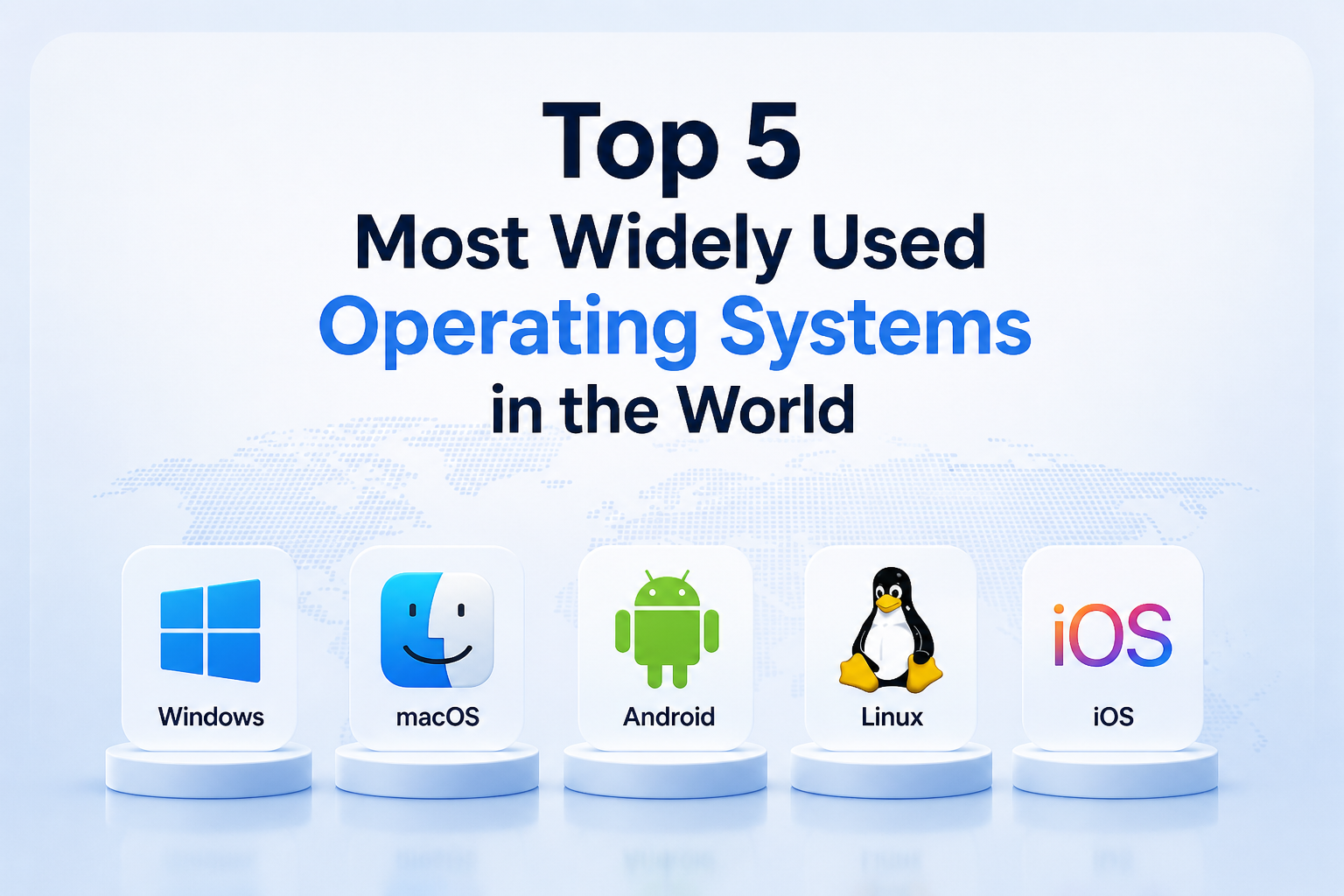
Let’s take a closer look at the top five most widely used operating systems in the world.
1. Android – The King of Mobile Operating Systems
Android is the world’s most popular operating system by number of active devices. Developed by Google, Android powers the majority of smartphones and tablets globally.
Why Android Is So Popular
- Open-source and highly customizable
- Available on devices from brands like Samsung, Xiaomi, and Oppo
- Supports millions of apps through the Google Play Store
- Available at every price point, from budget phones to flagship devices
Interesting Fact
Android was originally developed for digital cameras before becoming the operating system that now powers billions of smartphones worldwide.
2. Windows – The Backbone of Personal Computing
Microsoft Windows has been the dominant desktop operating system for decades. Developed by Microsoft
, Windows is widely used in homes, schools, and businesses.
Why Windows Dominates
- User-friendly interface
- Excellent software compatibility
- Popular for gaming and professional work
- Strong enterprise support
Common Versions
Popular releases include Windows 10 and Windows 11.
Interesting Fact
Over one billion devices around the world run Windows, making it one of the most successful software products ever created.
3. iOS – Apple’s Premium Mobile Experience
iOS is the operating system used on the iPhone. Developed by Apple
, iOS is known for its sleek design, strong security, and seamless integration with other Apple products.
Why Users Love iOS
- Fast and smooth performance
- Exceptional security and privacy
- Regular software updates
- Tight integration with devices like the Apple Watch and MacBook
Interesting Fact
Apple controls both the hardware and software of the iPhone, allowing iOS to deliver an optimized and highly polished user experience.
4. macOS – The Creative Professional’s Favorite
macOS powers Apple’s line of Mac computers. It is especially popular among designers, developers, video editors, and music producers.
Why macOS Stands Out
- Elegant and intuitive interface
- Stable and secure environment
- Unix-based architecture
- Optimized for Apple Silicon chips
Interesting Fact
macOS is built on a Unix foundation, giving it the stability of enterprise systems and the simplicity of a consumer-friendly interface.
5. Linux – The Powerhouse Behind Servers and Supercomputers
Linux may not be as visible to everyday users, but it powers much of the internet. Most web servers, cloud infrastructure, and supercomputers run Linux-based systems.
Why Linux Is So Powerful
- Free and open-source
- Highly secure and customizable
- Preferred by developers and system administrators
- Powers distributions like Ubuntu, Debian, and Fedora
Interesting Fact
The vast majority of the world’s fastest supercomputers use Linux.
Conclusion
Operating systems are the digital foundations of our modern world. Whether you are browsing the web on Android, working on Windows, editing videos on macOS, or running a website on Linux, these platforms shape the way technology serves humanity.
Each operating system has its own strengths, but together they power nearly every connected device on the planet. Understanding them not only makes you a smarter technology user but also offers insight into the software ecosystems driving the future.